
The Vatican

The Pope's catechesis will address Vatican II and evangelization

On the same day that the Consistory with the cardinals began, Pope Leo XIV announced at today's Audience that the catechesis will address Vatican II and its documents. Its teaching is today “the guiding star of the Church's journey,” he said, drawing on the words of recent popes and emphasizing the Church's proclamation of the Gospel of the Kingdom of God.  

Editorial Staff Omnes-January 7, 2026-Reading time: 3 minutes
Pope Angelus, January 6, 2026

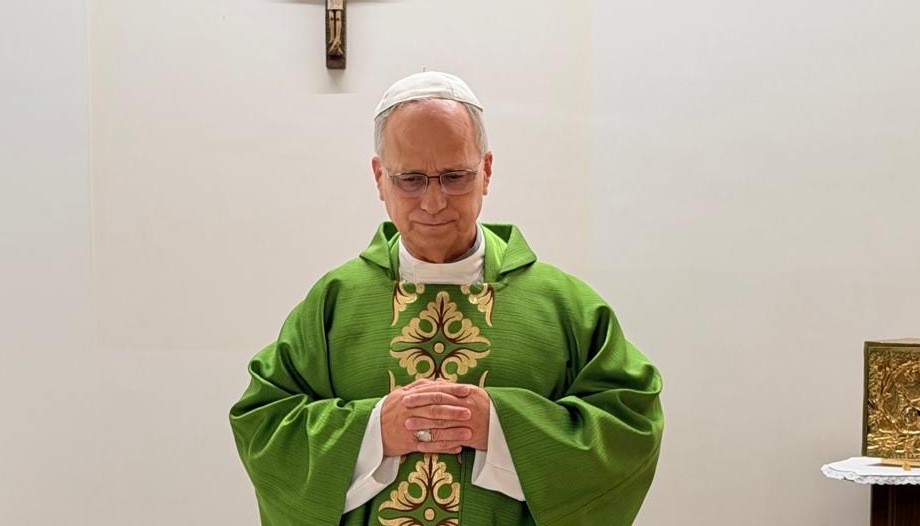
Pope Leo XIV greets pilgrims gathered in St. Peter's Square after reciting the Angelus from the central balcony of St. Peter's Basilica in the Vatican on January 6, 2026. (Photo CNS/Vatican Media).

Pope Leo XIV announced at the General Audience on Wednesday, July 7, that the next catechesis will focus on Vatican Council II through its documents. The announcement was made in the Paul VI Hall before numerous faithful and pilgrims, in the usual languages, including Chinese and Arabic.

“After the Jubilee Year, during which we have reflected on the mysteries of Jesus” life, we are beginning a new cycle of catechesis dedicated to the Second Vatican Council and a re-reading of its documents. This is a valuable opportunity to rediscover the beauty and importance of this ecclesial event," the Pope said.

The reading was an excerpt from St. Paul's Letter to the Hebrews, chapter 13, in which the Apostle writes that «Christ is the same yesterday and today, and will be forever.» He exhorts us “not to be led astray by any kind of strange doctrines.”.

Support for all recent Popes

The papal decision was based on his predecessors in the See of Peter, beginning with St. John XXIII, who convened the Council, and especially St. Paul VI, who concluded it. 

However, Pope Leo XIV's initial quote was from St. John Paul II, who, at the end of the Jubilee in 2000, stated the following: “I feel more than ever the duty to point to the Council as the great grace from which the Church has benefited in the 20th century” (Apostolic Letter Novo millennio ineunte, 57).

“Polar star of the Church’s path”

The Holy Father Leo XIV recalled that, along with the anniversary of the Council of Nicaea, “in 2025 we will commemorate the sixtieth anniversary of the Second Vatican Council.” And “although the time separating us from this event is not long, it is also true that the generation of bishops, theologians, and believers of Vatican II are no longer with us today.”

Therefore, “we feel called not to stifle prophecy and to continue seeking ways and means to implement the intuitions” of the Council, (…) rereading its documents and reflecting on their content. In fact, it is the Magisterium that still constitutes the guiding star of the Church's journey today.”

Benedict XVI: the teachings of Vatican II, “particularly relevant”

“As Benedict XVI taught,” he emphasized in the Audience Leo XIV, “the conciliar documents have not lost their relevance over the years. On the contrary, their teachings are particularly relevant in the face of the new challenges facing the Church and today's globalized society” (First message after Mass with the cardinal electors, April 20, 2005).

He then reminded Pope Francis: Rediscovering the Council helps us to “give primacy back to God, to the essential.”.

Cardinal Luciani (John Paul I): “deeper and more extensive holiness”

The Pope also took notice of Monsignor Albino Luciani. The future Pope John Paul I, «at the beginning of the Council, wrote prophetically: “There is still a need not so much for organizations, methods, or structures, but for deeper and more widespread holiness. (...) It may be that the excellent and abundant fruits of a Council will be seen after centuries and will mature by laboriously overcoming contrasts and adverse situations.‘’.

“Opening ourselves up to the world”

“The Second Vatican Council rediscovered the face of God as Father, who in Christ calls us to be his children. It has looked at the Church in the light of Christ, the light of the peoples, as a mystery of communion and a sacrament of unity between God and his people. It has initiated an important liturgical reform, placing at its center the mystery of salvation and the active and conscious participation of the whole People of God,” Pope Leo XIV recalled.

At the same time, “it has helped us to open ourselves to the world and to welcome the changes and challenges of the modern era in dialogue and shared responsibility. As a Church that wishes to open its arms to humanity, echo the hopes and anxieties of peoples, and collaborate in building a more just and fraternal society.”. 

Saint Paul VI: The time has come to set out

In conclusion, the Successor of Peter stated that “what St. Paul VI said to the Council Fathers at the end of their work remains a criterion of guidance for us today. He affirmed that the hour of departure had come. It was time to leave the conciliar assembly to go out to meet humanity and bring it the good news of the Gospel, in the awareness of having lived a time of grace in which the past, present, and future were condensed (St. Paul VI, Message to the Council Fathers, December 8, 1965). 

The authorEditorial Staff Omnes

La Brújula Newsletter Leave us your email and receive every week the latest news curated with a catholic point of view.